Oct 8, 2026INDUSTRY NEWS
Working Principle&Structure for Dust-Sand Test Chamber
The fan circulates airflow inside the closed chamber to suspend test dust, generating sand‑dust airflow with defined concentration and velocity to continuously blast test samples.
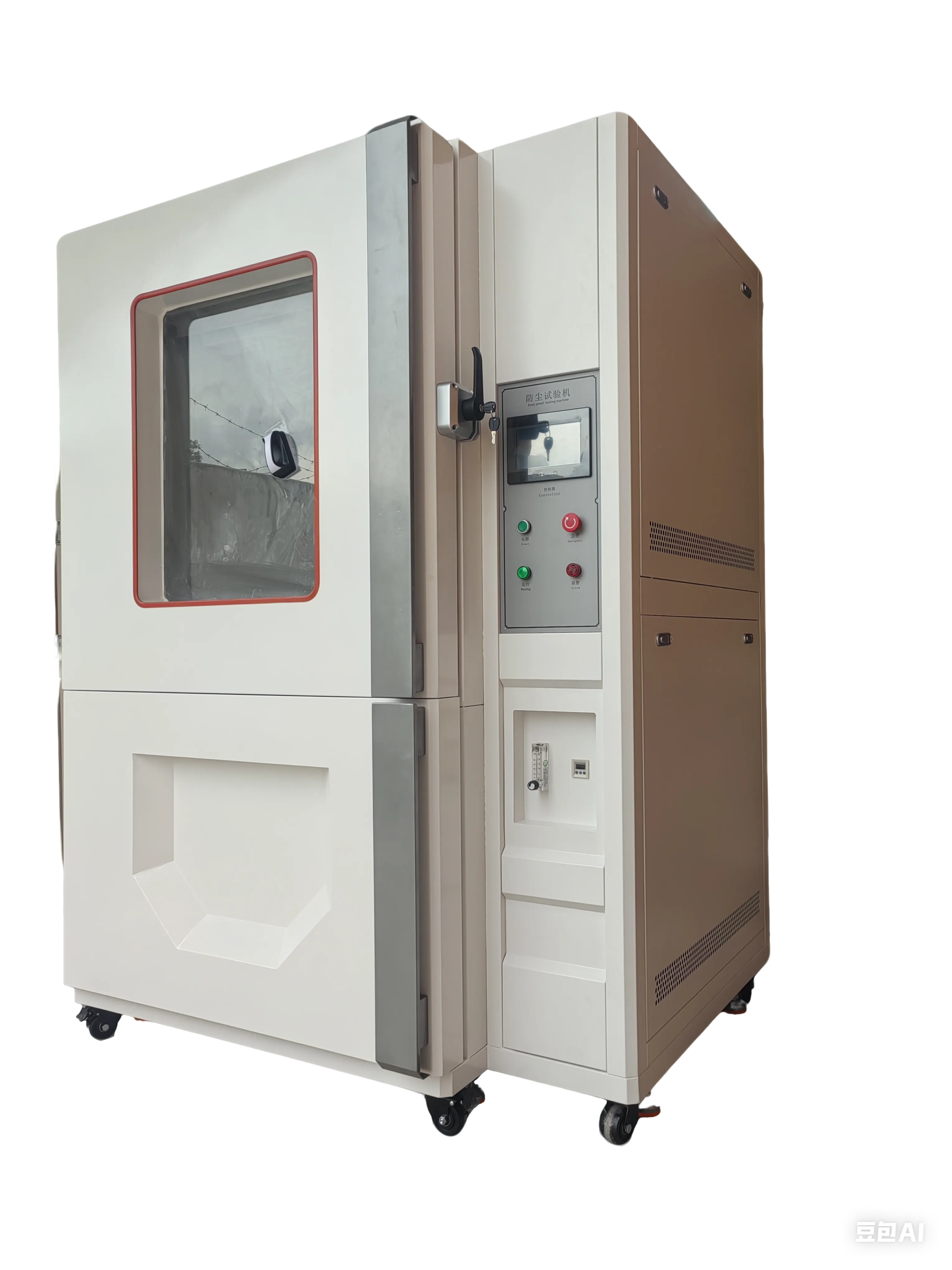
The dust‑sand test‑chamber simulates sand‑storm climate to evaluate durability and reliability of materials and products under dusty conditions. Widely used for electrical‑electronic goods, auto‑motorcycle parts and sealing components to verify performance during operation, storage and transportation.
Working Principle & Structure for Dust-Sand Test Chamber
A fan drives dust‑sand airflow over sample surfaces to test resistance against dust penetration, sand abrasion and blockage. Key components: ‑ Test chamber: Powder‑coated steel outer shell; inner tank of imported SUS stainless steel for anti‑corrosion. Customizable chamber size available.
‑ Air duct: Premium stainless‑steel O‑type closed‑loop vertical circulation duct for even dust distribution.
‑ Fan: High‑power low‑noise centrifugal fan with variable‑frequency speed adjustment.
‑ Dust shaking device: Driven by eccentric motor to avoid dust accumulation and guarantee stable test results.
‑ Control system: PLC programmable controller with timing & heating functions. Built‑in overload, short‑circuit and fault‑protection for safe operation.
Technical Parameters & Application
All parameters adjustable for different test standards:
- Test duration: 1 second ~ 999 hours adjustable
- Dust concentration: 2‑5 kg/m³, fluctuation ≤ ±10%
- Dust particle size: 1‑10 μm, over 50 % particles ≤5 μm
- Test temperature: RT+10 ~ 50℃, temp deviation ≤ ±2℃
Application Industries ‑ Automotive: Sealing & durability test for auto spare parts ‑ Electronics: Reliability test for electrical‑electronic products ‑ Aerospace: Performance verification for aircraft & satellite components ‑ General equipment: Durability assessment for devices under harsh dusty outdoor conditions.